The plaster rate per square foot in Pakistan is roughly PKR 64 to 125 in August 2026, depending on the city, plaster thickness, cement-sand ratio, surface condition, labor, and whether the quotation includes material. For standard residential work, single-coat plaster generally falls around PKR 64 to 92 per sq ft, while double-coat plaster is about PKR 86 to 125 per sq ft.
For a house in Islamabad or Rawalpindi, you should generally budget around PKR 96-125 per sq ft for double-coat plaster, including materials and labor. The final figure depends on wall height, sand quality, access, surface preparation, and the agreed mix ratio.
This guide covers August 2026 plaster rates across major Pakistani cities, explains what contractors should include in the rate, compares single and double coats, and shows you how to calculate the plaster cost for your own house.
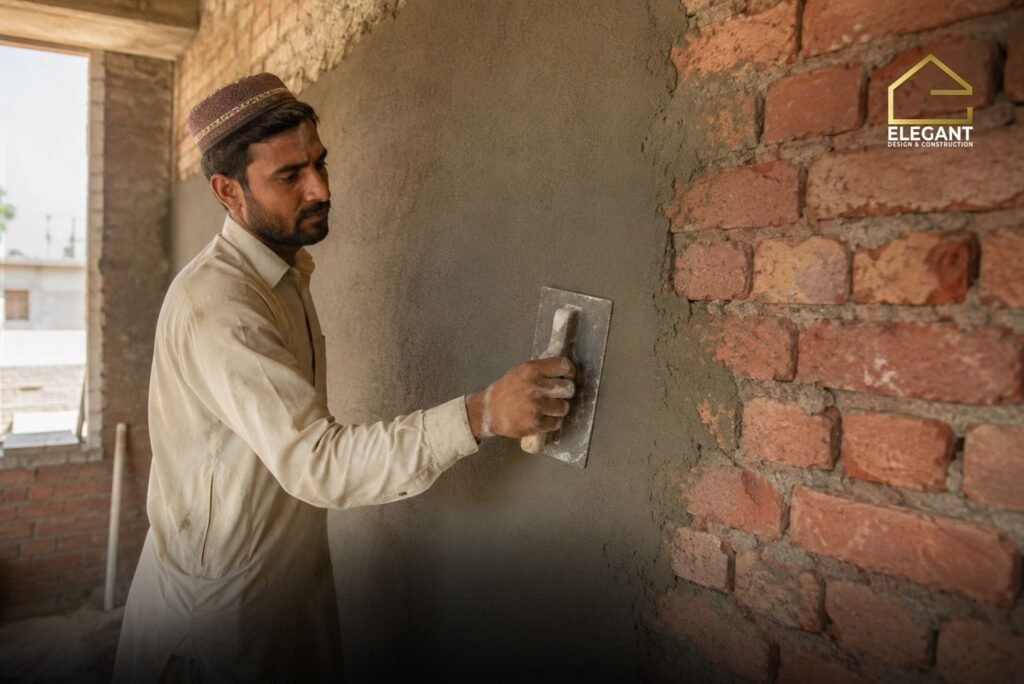
What Is Plaster Rate Per Square Foot?
The plaster rate per square foot is the total cost of cement, sand, and labor per square foot of wall surface. There are two forms of this rate: labor-only and labor plus material cost. The scope must be confirmed before any quotation from a trusted construction company.
The standard practice of Pakistani contractors has two coats of plaster. The first coat is to even out the wall, and the second coat is to smooth the finish. For external walls, a third ‘rough cast’ coat may be necessary for some projects.
A typical material-and-labor plaster rate can include:
- Cement
- Plaster-grade sand
- Mason labor
- Helper labor
- Mixing and application
- Surface preparation
- Corner and edge finishing
- Scaffolding where required
- Water for mixing and curing
- Curing after application
Some contractors quote labor only. Others provide a complete rate with cement and sand.
What Is the Average Plaster Rate Per Square Foot in Pakistan (August 2026)
The average plaster rate per square foot in Pakistan in August 2026 ranges from approximately PKR 64 to PKR 125 per square foot, depending on the city, plaster type, material quality, and labor charges.
For residential construction, the practical August 2026 ranges are:
| Plaster Type | Approx. Rate Per Sq Ft | Typical Use |
| Single-coat plaster | PKR 64 to 92 | Boundary walls, utility areas, basic work |
| Double-coat plaster | PKR 86 to 125 | Bedrooms, lounges, drawing rooms, standard residential interiors |
| Labor only | PKR 24 to 40 | When the owner supplies cement and sand |
| Waterproof external plaster | PKR 100 to 145+ | Exposed exterior walls, depending on treatment |
Material prices and labor vary between cities and even between neighbourhoods.
Plaster Rate in Major Cities of Pakistan (August 2026)
Your city affects the final plaster rate based on labor, sand availability, transport, and different site conditions.
| City | Single Coat | Double Coat | Labor Only |
| Islamabad | PKR 75 to 92 | PKR 102 to 125 | PKR 30 to 40 |
| Rawalpindi | PKR 70 to 88 | PKR 96 to 118 | PKR 28 to 38 |
| Lahore | PKR 72 to 88 | PKR 96 to 116 | PKR 28 to 38 |
| Karachi | PKR 75 to 92 | PKR 100 to 120 | PKR 30 to 40 |
| Peshawar | PKR 68 to 84 | PKR 92 to 112 | PKR 26 to 36 |
| Quetta | PKR 70 to 86 | PKR 94 to 114 | PKR 27 to 37 |
| Faisalabad | PKR 65 to 80 | PKR 88 to 108 | PKR 24 to 34 |
| Multan | PKR 64 to 78 | PKR 86 to 105 | PKR 24 to 33 |
The rates are intended for budgeting. At Elegant Design & Construction, our contractors quote these ranges according to the requirements and project complexity.
Plaster Rate in Islamabad (August 2026)
The practical plaster rate in Islamabad is around PKR 75 to 125 per sq ft, depending on the plaster system and project conditions.
For standard residential work:
- Single coat: PKR 75 to 92 per sq ft
- Double coat: PKR 102 to 125 per sq ft
- Labor only: PKR 30 to 40 per sq ft
Areas such as F-6, F-7, F-8, G-series sectors, E-11, B-17 and Bahria Enclave can have different contractor rates because labor availability, access and project specifications vary.
Plaster Rate in Rawalpindi (August 2026)
In Rawalpindi, plaster work generally falls around PKR 70 to 118 per sq ft.
Typical pricing figures are:
- Single coat: PKR 70 to 88 per sq ft
- Double coat: PKR 96 to 118 per sq ft
- Labor only: PKR 28 to 38 per sq ft
The rate can vary between Satellite Town, Saddar, Chaklala, Bahria Town, Adiala Road, and newer housing developments. Rawalpindi and Islamabad share many suppliers and labor crews, so their plaster rates often sit close to each other.
Plaster Rate in Lahore (August 2026)
The August 2026 planning range for plaster work in Lahore is approximately PKR 72 to 116 per sq ft.
- Single coat: PKR 72 to 88 per sq ft
- Double coat: PKR 96 to 116 per sq ft
- Labor only: PKR 28 to 38 per sq ft
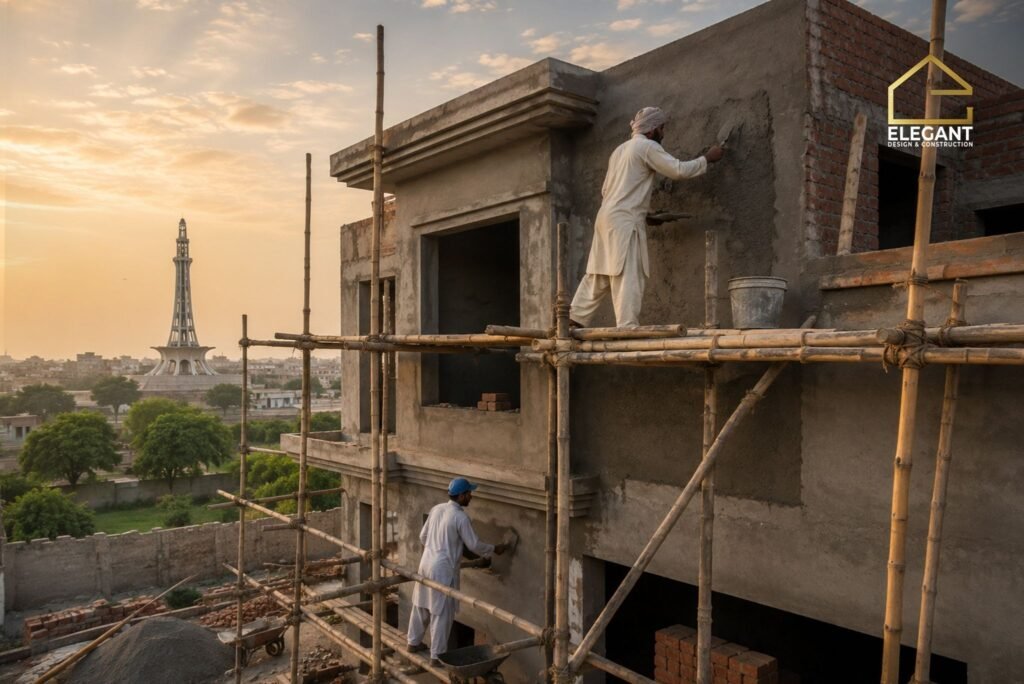
Projects in DHA Lahore, Bahria Town, Gulberg and other higher-specification areas may fall toward the upper end when the owner requires a cleaner finish and closer supervision.
According to current 2026 construction data, Lahore sand is around PKR 65 to 95 per CFT. Lahore’s sand prices also vary considerably by source and grade.
Plaster Rate in Karachi (August 2026)
Karachi’s plaster rate is generally around PKR 75 to 120 per sq ft for common residential work.
The expected range is:
- Single coat: PKR 75 to 92 per sq ft
- Double coat: PKR 100 to 120 per sq ft
- Labor only: PKR 30 to 40 per sq ft
Karachi projects can see higher delivered material costs because sand and other construction materials may travel considerable distances before reaching the site.
The type of wall also matters. Block construction and brick construction don’t always require the same preparation, thickness, or finishing approach.
Single-Coat vs Double-Coat Plaster: Which One Should You Choose?
Pakistani contractors are using two types of plaster systems. Your selection will affect the cost, wall durability, and quality of paint finish. Know both options to avoid expensive changes during the project.
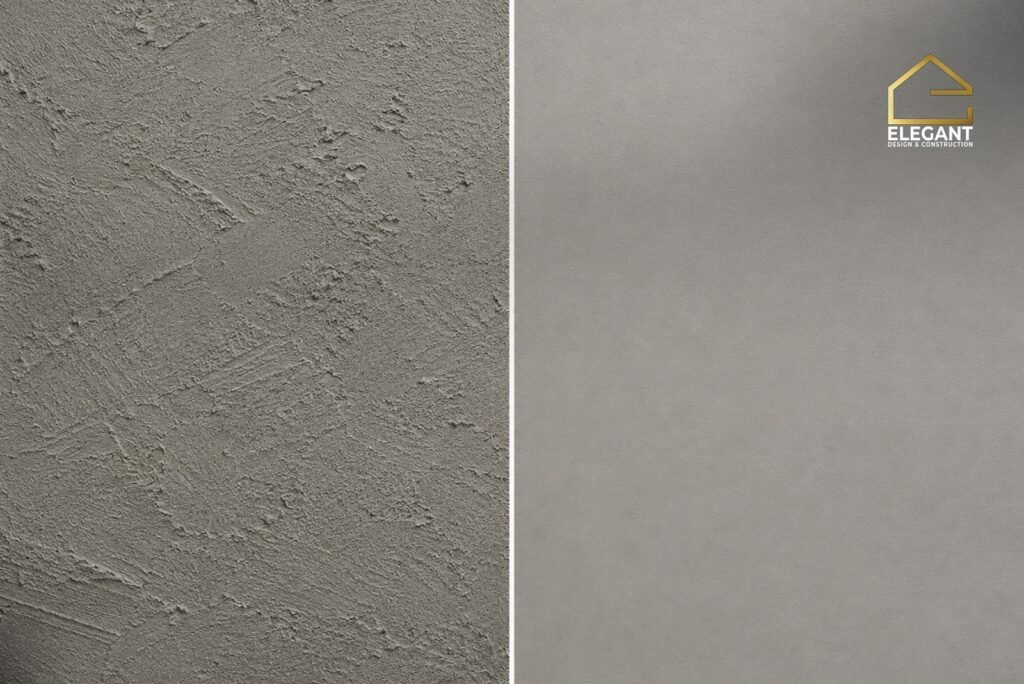
Single-Coat Plaster
Single-coat plaster applies one layer of cement-sand plaster over the masonry surface. It can make sense where appearance is not the main concern.
Suitable areas include:
- Boundary walls
- Store rooms
- Service areas
- Utility spaces
- Temporary structures
- Walls receiving tile or another covering
- Lower-budget construction
Advantages
- Lower material consumption
- Lower labor cost
- Faster application
- Suitable for basic surfaces
Limitations
- Less correction for uneven brickwork
- Finish depends heavily on the mason
- Surface may not be suitable for premium paintwork
- Poorly prepared walls can show imperfections
Double-Coat Plaster
Double-coat plaster uses a base coat followed by a finishing coat. The first coat corrects the masonry surface. The second provides a more even surface for subsequent finishing work.
It is generally the safer choice for:
- Bedrooms
- Living rooms
- Drawing rooms
- Dining areas
- Staircases
- Kitchens
- Standard commercial interiors
- Premium residential construction
The additional cost is justified when you want a more even wall before putty and paint.
Double-Coat Advantages:
- Ensures a smooth and paintable finish
- Suitable for 25+ years with good curing
- Tolerates cracks and surface damage
- Hides imperfections of brickwork completely
- Increases the resale value of your property
- Provides better thermal insulation
Double-Coat Considerations:
- Minimum curing time is 7 days
- Needs skilled masons for the finish coat
- The application takes 40% longer to apply
Factors Affecting Plaster Rate in Pakistan 2026
Multiple variables shape the final plaster cost. Buyers should evaluate every factor before signing contracts.
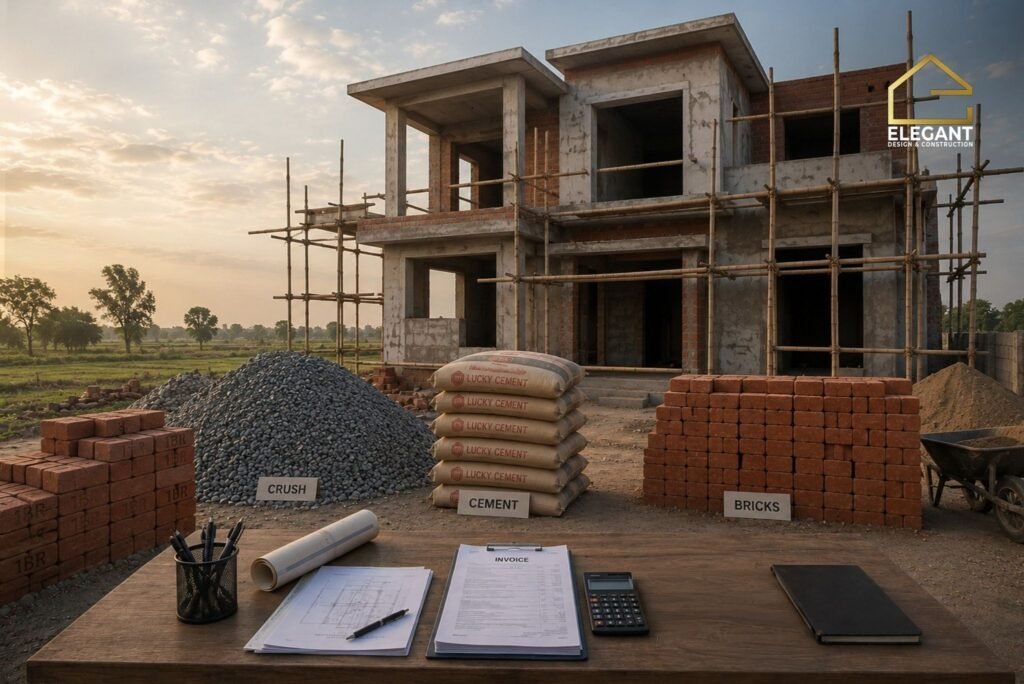
- Cement brand, including Bestway, DG, Maple Leaf, and Lucky, varies in pricing
- Sand quality, such as Chenab sand, commands premium rates.
- Wall height above 12 feet requires extra scaffolding
- Project location like urban centers costs more than peripheries
- Old wall repair adds 15–20% overhead
- Mix ratio 1:3 costs more than 1:4
- Monsoon season delays push labor rates upward
Material rates fluctuate weekly. Always cross-check the latest construction material rates in Pakistan 2026 before finalizing your budget.
How to Calculate Your Plaster Cost
Use this simple formula to estimate your project:
Total Plaster Cost = Wall Surface Area (sq ft) × Rate Per Square Foot
Steps to measure wall surface:
- Measure each wall’s length and height.
- Multiply length × height for each wall.
- Add all wall areas together.
- Subtract door and window openings.
- Multiply the net area by your city’s plaster rate.
For accurate project budgets, review our construction cost per square foot in Pakistan guide.
Plaster Rates Compared to Other Grey Structure Costs
Plaster constitutes 9–13% of the total grey structure budget. The remaining costs cover steel, brickwork, RCC, and roofing. Homeowners planning a double-story grey structure in Pakistan in 2026 should allocate accordingly.
Tips to Reduce Plaster Cost Without Sacrificing Quality
- Buy cement in bulk from authorized dealers.
- Source sand directly from quarry suppliers.
- Schedule plaster work during off-peak months (November–February).
- Hire labor on per-square-foot contracts, not daily wages.
- Inspect mix ratios on-site daily.
- Cure plaster for a minimum of 7 days to avoid cracks.
- Avoid additives unless the walls face direct rain exposure.
Get a Plaster Quote Based on Your Actual Wall Area
Plaster cost should be calculated based on your house plans and site measurements, not from a generic per-square-foot figure.
At Elegant Design & Construction, we can assess your project, calculate the required plaster area, define the material specification, and prepare a clear quotation for construction work in Islamabad and Rawalpindi.
If you’re building a new house or completing the grey structure, request a project-specific plaster quotation based on your drawings and actual site conditions.
Frequently Asked Questions
What is the labor rate for plaster in Pakistan?
Plaster labor generally falls around PKR 24 to 40 per sq ft in the planning ranges used for August 2026. The exact rate depends on the city, wall height, mason skill, and site conditions.
Is double-coat plaster better than single-coat plaster?
For main residential interiors, double-coat plaster is generally the better choice because it provides more opportunity to correct uneven masonry and produce a smoother surface for finishing. Single-coat plaster can make sense for boundary walls, utility areas and surfaces that will receive another covering.
Does plaster rate include cement and sand?
Not always. Some contractors quote labor only, while others quote material plus labor. Always confirm this before comparing rates.
What cement-to-sand ratio is used for plaster?
A 1:4 cement-to-sand ratio is commonly used for residential plaster, although the correct ratio depends on the project specification and type of work.
How long should plaster be cured?
Curing should be according to the project specification and site conditions. For cement plaster, proper moisture retention after application is important for strength and surface performance.