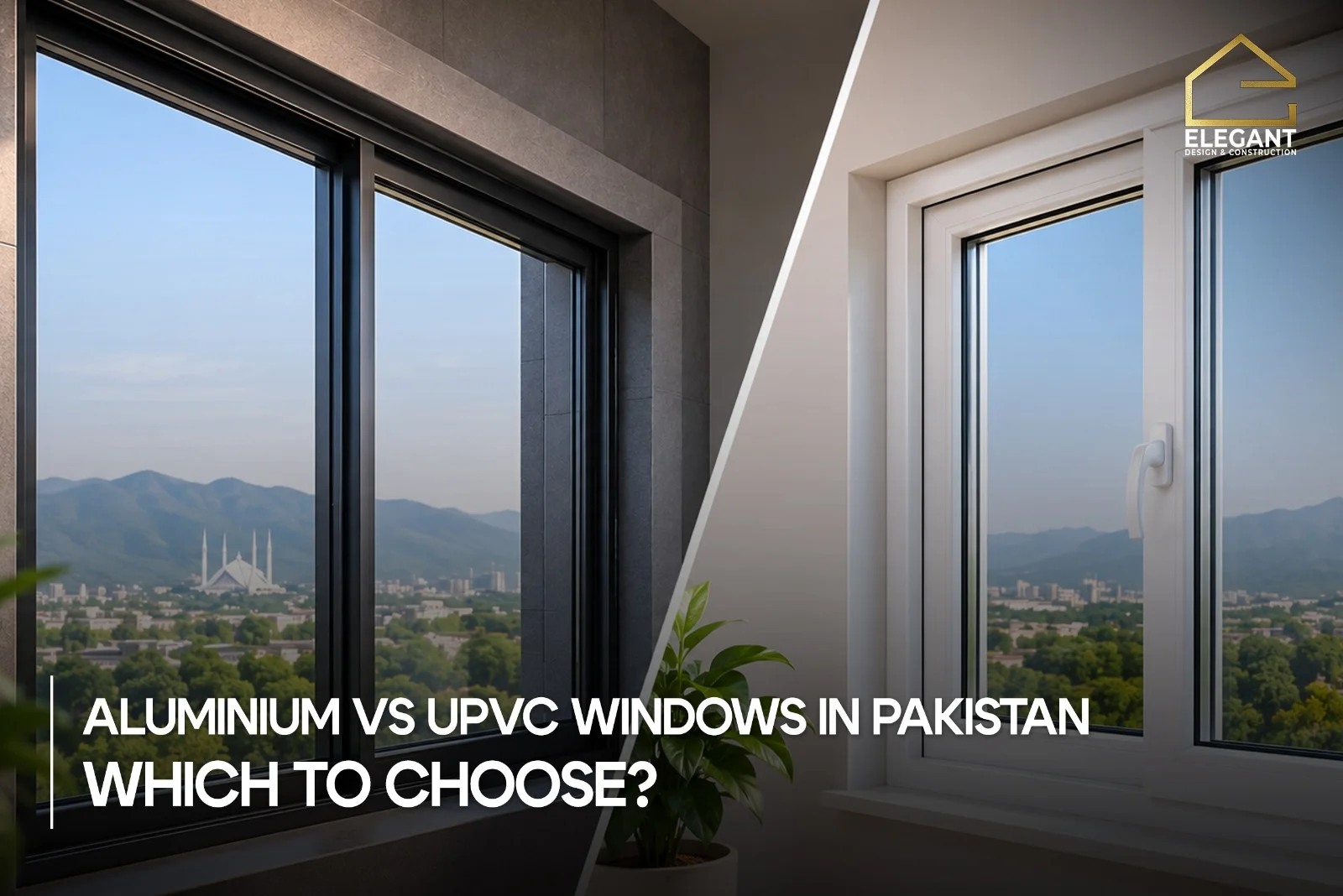
Aluminium windows suit most Pakistani homes that need slim frames and large glass areas, while uPVC windows suit homes that put insulation, noise reduction, and low upkeep first. The better choice depends on the room, its exposure, and the quality of the frame system, not on the material name alone.
A well-made uPVC frame will outperform a thin, poorly finished aluminium one, and the reverse is equally true. This article compares both materials on heat, noise, strength, sealing, finish, maintenance, and security. It uses conditions common in Islamabad and Rawalpindi, and it ends with checks you can run before placing an order.
Aluminium vs uPVC Windows at a Glance
| Factor | Aluminium | uPVC | Stronger option |
| Heat insulation | Conducts heat unless fitted with a thermal break | Low conductivity, multi-chamber profile | uPVC, or thermal-break aluminium |
| Strength on wide openings | Stiff, carries large panes in slim frames | Needs steel reinforcement, bulkier frames | Aluminium |
| Frame appearance | Slim sightlines, many powder-coat colours | Mostly white or foil-laminated tones | Aluminium |
| Rain and dust sealing | Depends on track design and seals | Welded corners, compression gaskets | uPVC for casement types |
| Upkeep | Check coating, clean tracks and weep holes | Wipe clean, check gaskets | uPVC |
| Sunlight ageing | Coating can fade over time | Poor-quality profiles can yellow | Depends on build quality |
| Rigidity and security | Rigid frames, strong locking points | Strong when steel-reinforced | Aluminium, slightly |
No material wins every row, and the sections below explain what lies behind each result and how to apply it to your own house.
How Islamabad and Rawalpindi Weather Affects the Choice
Summer Heat
Summer afternoons in the twin cities push heat through glass and frames into air-conditioned rooms. Plain aluminium conducts heat quickly, so a standard frame warms up and passes that heat inside. Thermal-break aluminium places a polyamide strip between the inner and outer sections to slow the transfer.
uPVC resists heat flow by nature, and its multi-chamber profile traps air inside the frame, though frames are only part of the picture. Glass covers most of a window, so a double-glazed unit with a low-emissivity coating often matters more than the frame material, especially on west-facing walls.
Monsoon Rain and Dust
Heavy rain and fine dust test every joint in a window. Sliding windows are very common in Pakistani homes, and their bottom tracks collect water and grit. Look for drainage slots, a raised track edge, and brush seals on the moving sash.
Casement and tilt-and-turn sashes press a gasket against the frame when closed. This usually gives a tighter seal in driving rain than a sliding sash can offer.
Winter Cold and Condensation
Winters in Islamabad are cold enough for moisture to form on chilled surfaces. A single-glazed window in a plain aluminium frame cools quickly, and condensation can collect on its inner face, an effect that double glazing and thermal-break frames both reduce.
Traffic and Street Noise
Sound enters mainly through glass and gaps, not through the frame itself. A casement or tilt-and-turn window with double glazing and good gaskets blocks more noise than a sliding window with single glass. Laminated glass adds further damping for plots on busy roads.
Strength, Size, and Appearance
Aluminium is stiffer than uPVC, so it supports wider panes with slimmer frames. This is why large lounge windows, staircase glazing, and double-height openings usually use aluminium. If you are planning a tall opening, see our notes on double-height living room design in Pakistan.
uPVC frames look bulkier because they need steel reinforcement inside to resist bending on larger openings. Finish is the other difference: aluminium takes powder coating in many colours, including matte black and charcoal, while uPVC mostly comes in white or wood-tone foil.
Scratches on laminated foil are harder to touch up than marks on powder coating.
Choose frame colour together with the facade. Our guides to house front elevation designs and main gate designs show how frame, gate, and wall finish work as one set.
Glass: The Part Most Buyers Overlook
The glass specification changes comfort more than most people expect. These are the glass options you will meet in quotations from window suppliers:
- Single glass: one pane, lowest insulation. Acceptable for small or shaded windows.
- Double-glazed unit: two panes with a sealed air gap. It cuts heat transfer and some noise.
- Low-E coating: a thin coating that reflects heat. It helps most on west and south walls.
- Laminated glass: two panes bonded by an interlayer. It reduces noise and holds together if broken.
- Tempered glass: heat-strengthened safety glass, recommended for doors and panes close to the floor.
Ask for the glass thickness and coating of every window in writing. Two quotations with the same frame can differ widely in glass.
Window Types and Which Material Suits Them
Sliding Windows
Sliding windows save space because the sash does not swing out into the room. They open only half the frame at a time and rely on track design for sealing. Both materials work well, although aluminium handles wide spans better.
Casement Windows
Casements are hinged and open fully, which gives better ventilation and a tighter seal, but they need clear swing space. They suit bedrooms facing roads, and both materials perform well in this type.
Tilt-and-Turn Windows
These open inward from the top or the side, so you can ventilate safely at night and clean the glass from inside. They are common in uPVC and work well on upper floors.
Fixed Windows
Fixed panes do not open, so they seal best of all the types. Use them for light and views, and pair them with a small openable sash when the room also needs fresh air.
Which One Should You Choose?
| Situation | Better choice | Reason |
| Large lounge or double-height glass | Thermal-break aluminium | Slim frames carry wide panes |
| Bedroom on a busy road | Casement, either material, with double or laminated glass | Compression seals and glass limit noise |
| West-facing wall | Either, with double-glazed Low-E glass | Glass controls most of the heat gain |
| Kitchen near the stove | Casement with a fly screen | Gives full opening and screened ventilation |
| Washroom | Small casement or top-hung, frosted glass | Privacy with ventilation; see our bathroom renovation guide |
| Frame colour matched to the elevation | Aluminium | Wider colour range |
| Minimal upkeep preferred | uPVC | No coating to maintain |
How to Check Quality Before You Order
- Ask for the profile system name and the wall thickness in millimetres. Thin sections flex and loosen over time.
- Request a cut corner sample. Aluminium corners should be tightly cleated, and uPVC corners should be fully welded and cleaned.
- Confirm the finish. Aluminium should be powder-coated or anodised, and uPVC profiles should be UV-stabilised. Get the finish warranty in writing.
- Inspect the hardware, including rollers, hinges, handles, and multi-point locks. Hardware usually fails before frames do.
- Note the glass specification for each window, including thickness and coating.
- Look for rubber gaskets and drainage slots in sliding tracks.
- Include fly screens in the written scope.
- Ask who installs the frames, how they are fixed to the opening, and how the sill is sealed.
For current market pricing, see our separate guide to aluminium windows price in Pakistan.
Common Mistakes When Selecting Windows
- Choosing a window by its material name, without comparing frame thickness, hardware, and glass first.
- Ordering windows before the openings are final, when plaster thickness can still change the finished size.
- Ignoring the sill, where a poorly sloped or unsealed edge lets rainwater into the room.
- Adding mosquito screens after installation, which often means a custom fit for each frame.
- Mixing frame colours across the front elevation instead of picking one colour for the facade.
Window decisions fit best into finishing planning, alongside doors, ceilings, and flooring. Elegant Design & Construction plans finishing as part of its turnkey construction service in Islamabad and Rawalpindi.
Frequently Asked Questions
Is uPVC better than aluminium for hot weather?
uPVC insulates better than standard aluminium, but thermal-break aluminium narrows the gap. The glass specification matters more than either frame, so choose double glazing with a Low-E coating for sun-facing walls.
Are aluminium windows good for Pakistani homes?
Yes, when the profile is thick enough, the finish is durable, and the tracks drain properly. Aluminium is the usual choice for large openings and coloured frames.
Can uPVC windows be coloured?
Most uPVC windows are white, and coloured or wood-tone options come as laminated foil, which has a narrower range and is harder to repair than powder-coated aluminium.
Do double-glazed windows reduce air conditioner use?
They reduce heat gain through glass, which eases the load on cooling. The actual effect depends on orientation, shading, frame type, and how well the window is sealed.
Which window type is quietest?
Casement and tilt-and-turn windows with double or laminated glass block the most outside noise, while sliding windows let more sound through the track gap.