Spanish house design brings arches, terracotta roofs, stucco walls, and courtyards to Pakistani homes. It works well in Pakistan’s climate because thick walls and shaded courtyards keep interiors cool. You’ll find it across DHA, Bahria Town, and Gulberg Greens in Islamabad and Rawalpindi.
In this guide, we’ll break down where Spanish house design comes from, what makes it distinct, and how to plan it around your plot size. If you’re comparing this style against modern contemporary design for your next build, you’ll find that here too.
What Is Spanish House Design?
A Spanish house design is an architectural style that originated in Spain and later became popular in Mediterranean regions and the Americas.
It traces back to Andalusia, the region of southern Spain shaped by centuries of Moorish rule between 711 and 1492. That period blended Islamic, Roman, and North African building traditions into something distinct: Islamic building traditions arrived in Spain in 711 and drew from Islamic, Roman, Byzantine, and North African cultures, making it unlike any style that came before.
When this style reached the Americas through Spanish colonization, it picked up local adaptations. Today’s “Spanish house” in Pakistan carries that same design.
Why Spanish Villa Design Works So Well in Pakistan’s Climate
The style works well in cities like Islamabad, Rawalpindi, Lahore, and Karachi because:
- Thick walls and light-colored finishes help reduce heat absorption.
- Covered verandas and courtyards improve airflow.
- Natural materials perform well in hot climates.
- The architecture creates a luxurious, timeless appearance that suits large homes and farmhouses.
Spanish design for houses solved the heat problem centuries ago: the same styles, shade, thick mass, and moving air. This house design has beaten the Mediterranean heat in Pakistan’s climate, particularly in Punjab and much of Sindh.
That’s also why you’ll see expert architects recommend Spanish house design for both single-story and double-story homes in Rawalpindi and Islamabad, where summer temperatures regularly climb into the 40s.
Signature Features of a Spanish House
A Spanish house is recognizable at a glance, but each feature does real work. Here’s what defines the style and why each one matters.
Terracotta and Clay Tile Roofs
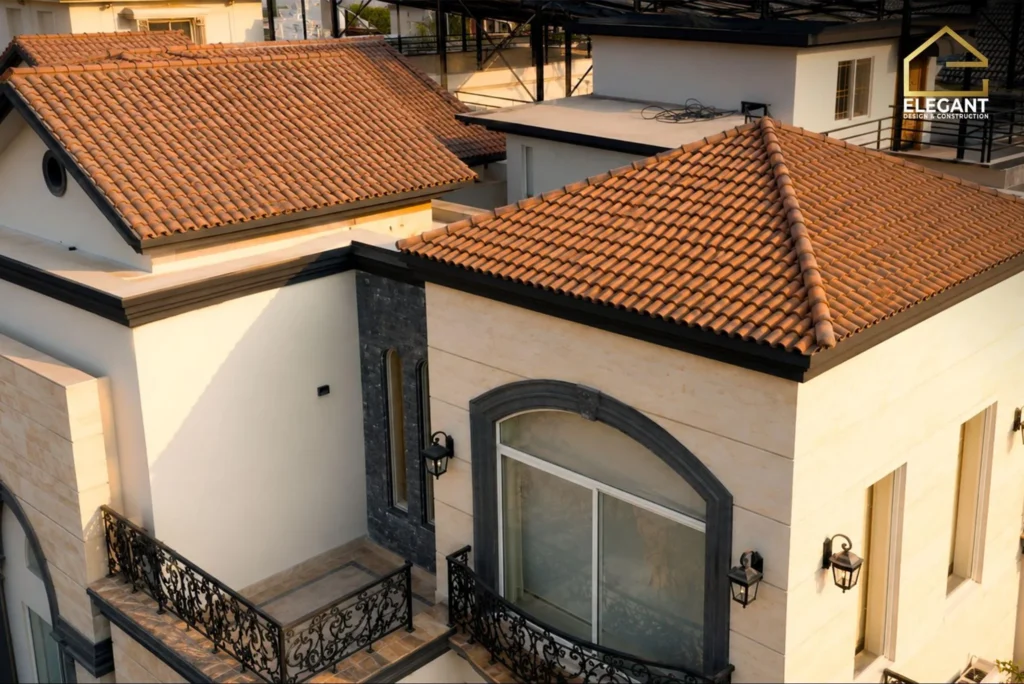
Curved terracotta tiles are the most identifiable marker of Spanish design. They shed rainwater efficiently during Pakistan’s monsoon season and hold up well against sun exposure over time. Their warm, earthy color also sets the tone for the rest of the home’s palette.
Stucco Walls and Warm Color Palettes
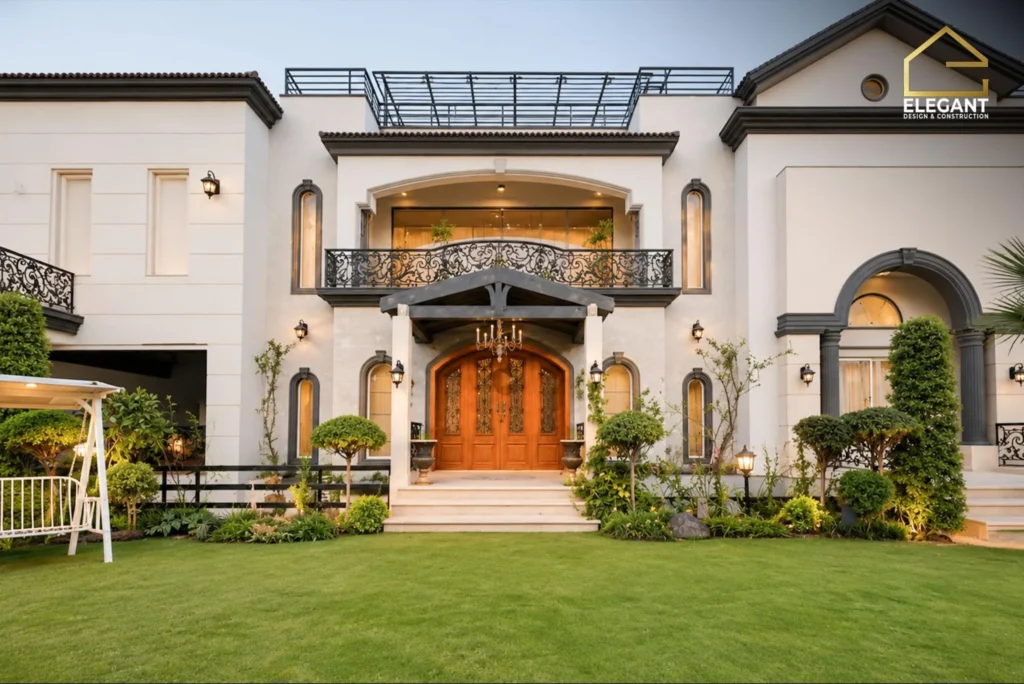
Smooth stucco exteriors, usually finished in white, cream, or warm beige, give Spanish homes their clean, sun-washed look. Beyond appearance, stucco adds a layer of insulation, making interiors more stable through temperature swings between day and night.
Arches Doorways & Windows
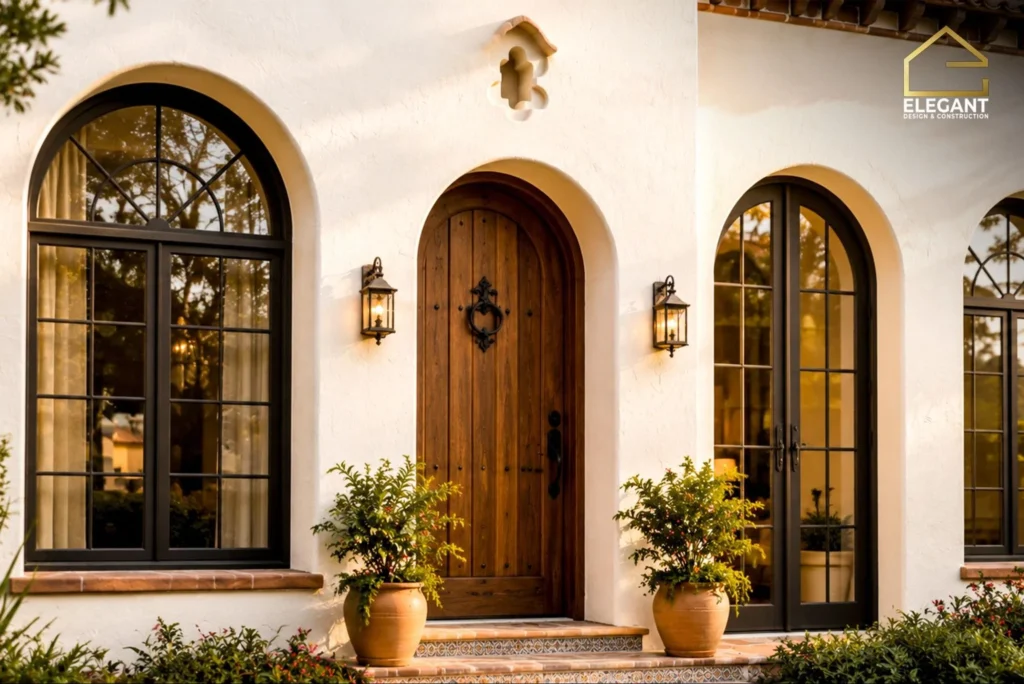
Arched doorways, windows, and verandas define the front elevation of a Spanish villa. Rounded or squared columns often frame the main entrance, adding height and formality without needing extra ornamentation.
If you’re deciding how to shape your house front elevation design, arches are usually the single biggest style decision you’ll make.
Courtyards and Water Features
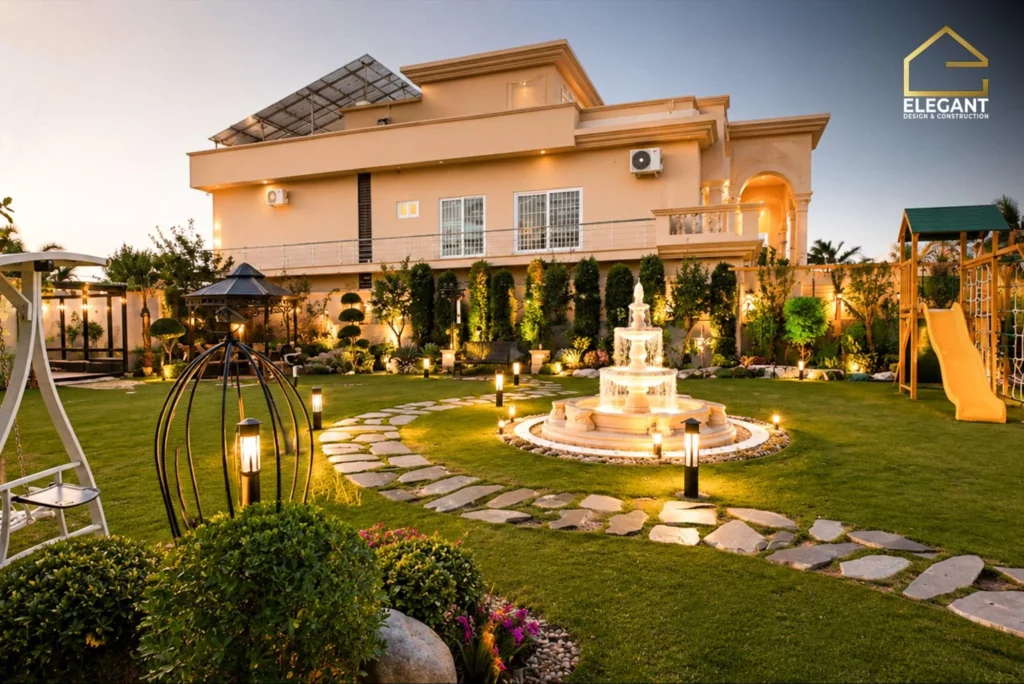
Courtyards sit at the heart of Spanish design, and they suit Pakistani family life particularly well. An enclosed outdoor space, often centered on a small fountain or a tiled floor, provides families with a private area for gatherings, meals, and evening tea.
Spanish home design is inspired by Mediterranean architecture, and its features enhance both the home’s beauty and its functionality. A well-planned courtyard is where that idea shows up most clearly, especially when paired with thoughtful landscape design around planting beds and pathways.
Wrought Ironwork and Wooden Beams
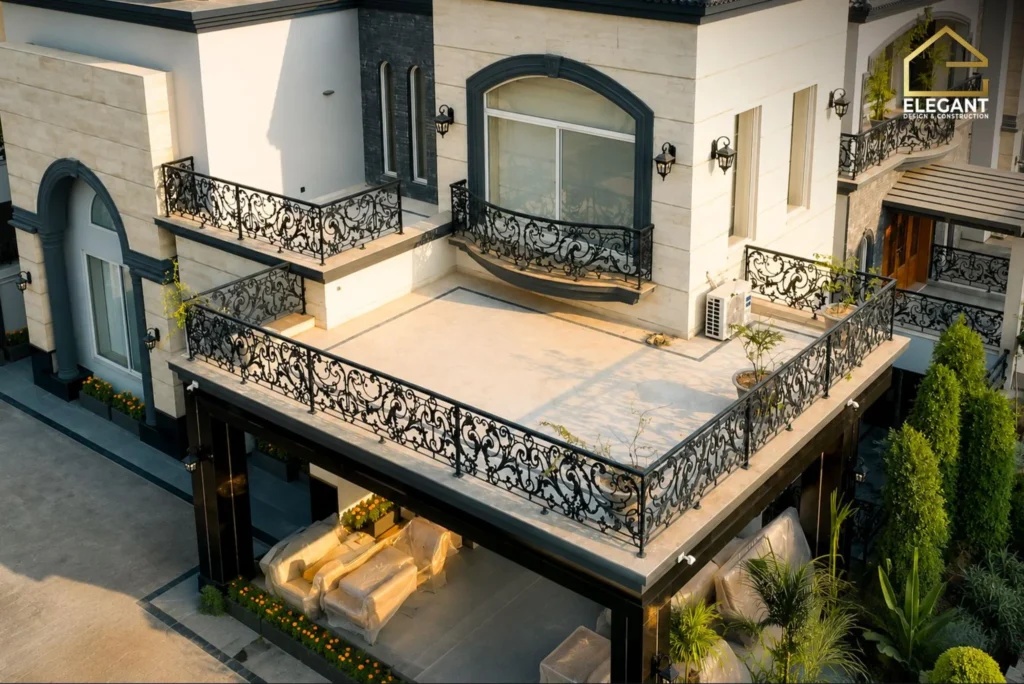
Decorative iron railings on balconies and staircases add contrast against stucco walls. Inside, exposed wooden ceilings bring warmth and texture, especially in double-height living rooms and entrance lobbies, which have become a popular feature in Pakistani Spanish villas.
Spanish House Design by Plot Size
Your plot size decides how much of the style you can realistically build. Here’s what to prioritize at each common size.
7 Marla Spanish House
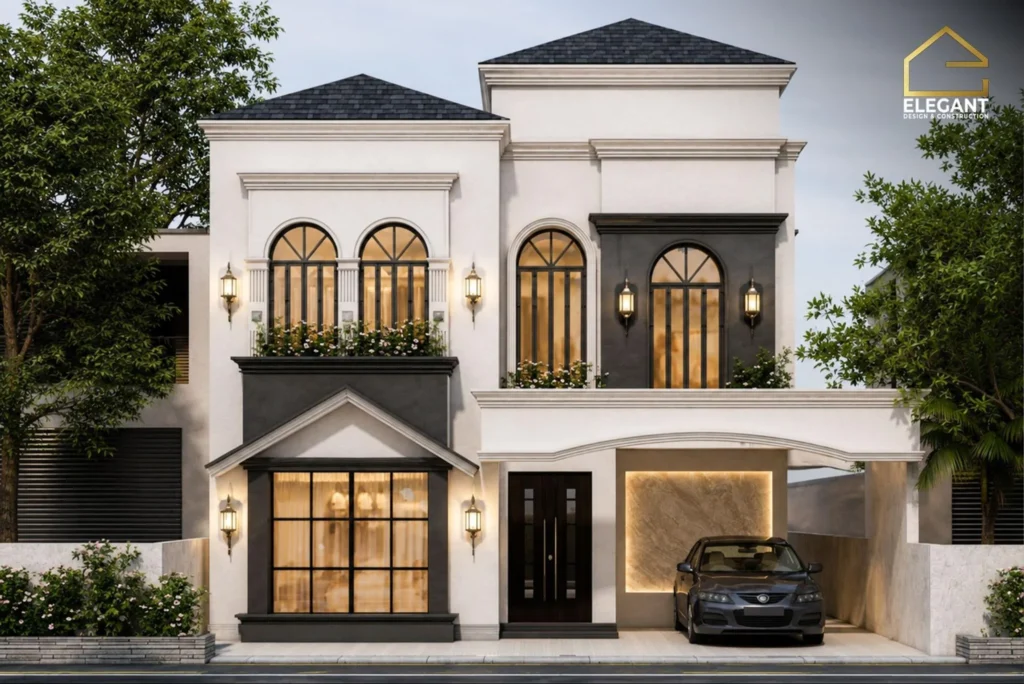
On a 7 Marla plot, space is limited, so focus on the front elevation first. An arched porch, a terracotta roof along the parapet, stucco finish, and a wrought-iron gate carry most of the visual weight. Inside, pick one Spanish-style room, usually the drawing room, and commit to it fully rather than spreading details thin across the house.
10 Marla Spanish House
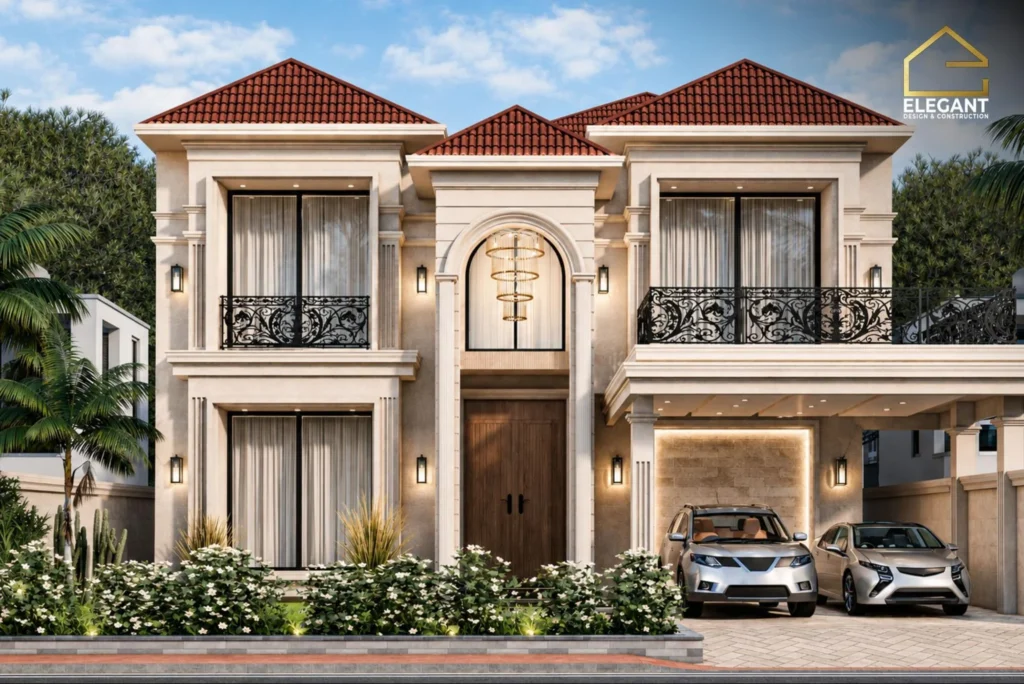
For a 10 Marla house design, you have enough room to extend the style. A proper courtyard becomes possible, even a compact one with a small fountain or planted corner. Double-height entrance lobbies work well here, and you can carry arched detailing through multiple rooms instead of just the front elevation.
1 Kanal Spanish House
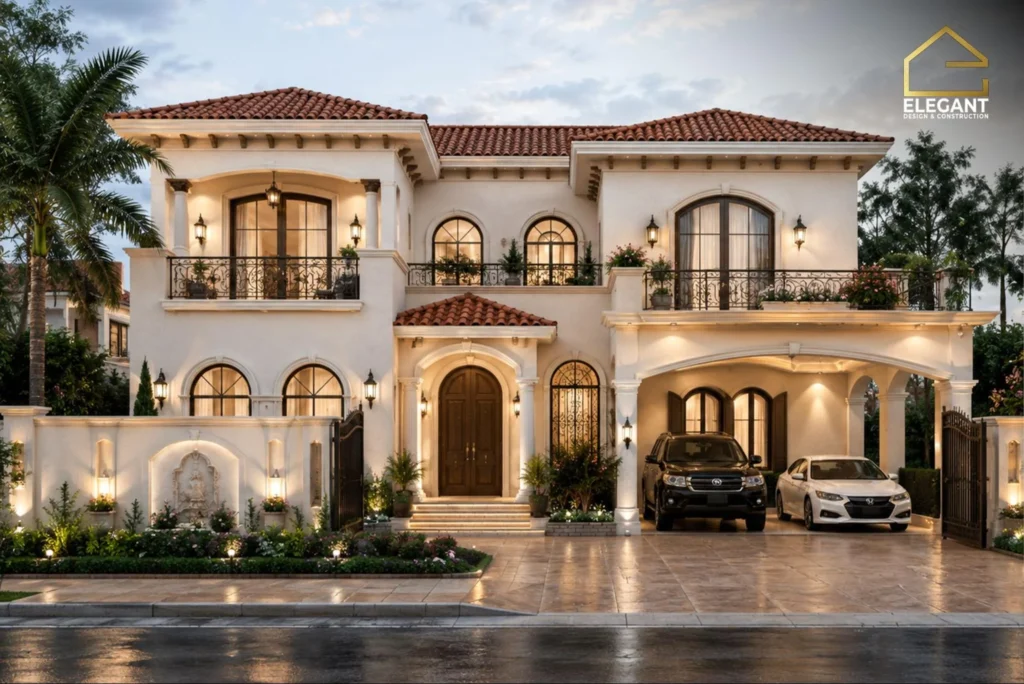
On a 1 Kanal plot, you can build the full Spanish experience: a central courtyard as the focal point, a wraparound veranda, double-height ceilings in the main reception area, and an ornate iron-balustrade staircase visible from the entrance. This plot size gives architects room to develop the style properly instead of compressing it.
If you’re exploring a 1 Kanal house design, Spanish architecture is one of the styles that scales up the most gracefully.
Where Spanish Houses Are Trending in Pakistan
Spanish design has become one of the most requested styles in Pakistan’s major housing societies over the past few years.
- DHA Lahore (Phases 5 through 8): Widely adopted, helped by a strong pool of skilled local craftsmen and an active property market.
- Bahria Town Lahore: Has followed a similar pattern, with growing demand for the same arched, stucco-finished look.
- Islamabad (F-6, F-7, Gulberg Greens): Appears in a calmer, more restrained form, with simpler arches and quieter color palettes that match the city’s more understated character.
- Rawalpindi: Growing interest in newer housing schemes, especially among homeowners who want a distinct look that stands apart from typical modern boxes.
Social media has played a real role here. Home tour videos featuring arched hallways and courtyard fountains have pushed the style well beyond architecture circles and into mainstream homeowner conversations.
Spanish vs. Modern Contemporary Design: Which Suits Your Plot?
Both styles have loyal followings in Pakistan, and the right choice depends on what you want your home to say and how it needs to function.
| Factor | Spanish House Design | Modern Contemporary Design |
| Visual character | Warm, textured, ornamental | Clean, minimal, geometric |
| Best suited to | Family homes, larger plots | Compact or urban plots |
| Climate performance | Strong passive cooling from thick walls and shade | Depends heavily on glazing and insulation choices |
| Maintenance | Roof tiles and stucco need periodic upkeep | Flat roofs and glass need regular waterproofing checks |
| Ideal for | Buyers wanting a distinct, established look | Buyers wanting flexibility and a lower-maintenance exterior |
If you want your home to stand out with texture and warmth, Spanish design delivers that.
If you prefer clean lines and lower long-term upkeep, trending home styles in Pakistan lean increasingly toward modern contemporary. Many homeowners also blend the two, keeping a Spanish front elevation with a more modern interior layout.
Interior Design Tips to Complete the Spanish Look
The exterior sets the tone, but interiors carry the style through the rest of the home. A few choices make the biggest difference.
- Flooring: Terracotta tiles or dark hardwood bring warmth underfoot and match the exterior palette.
- Ceilings: Exposed wooden beams, especially in double-height spaces, reinforce the rustic character style.
- Color palette: Warm tones like ochre, terracotta, and olive work well against whitewashed or cream walls.
- Furniture: Heavy, hand-carved wooden pieces suit the style better than sleek, minimal furniture.
- Lighting: Wrought iron chandeliers and wall sconces add character without overwhelming the space.
If you’d rather not plan every detail yourself, working with interior designers in Islamabad and Rawalpindi can help keep the interior consistent with your exterior style, without feeling disconnected from it.
Working With the Right Construction Partner
Getting Spanish house design right takes more than picking the right roof tiles. Arches need to be structurally sound, stucco needs proper application to last through Pakistan’s weather, and courtyards need drainage planned from day one, not added as an afterthought.
Elegant Design and Construction can help you decide which features fit your plot, your budget priorities, and your family’s daily routine, so the final result feels like a home you’ll actually use.
Ready to Plan Your Spanish House Design?
Spanish house design pairs beautifully with Pakistan’s climate because it was built to solve the same heat problem our summers create. Thick walls, courtyards, and arches aren’t just aesthetic choices. They’re practical ones that happen to look elegant.
Whatever your plot size, you can bring in enough of the style to make a real impact, whether a striking front elevation on a 7 Marla home or a full-courtyard villa on a 1 Kanal plot.
If you’re ready to explore what a Spanish house could look like on your own plot, get in touch for a design consultation with our team tailored to your space and goals.
Frequently Asked Questions
Can Spanish style work on a small plot like 7 Marla?
Yes. Focus your budget on the front elevation: an arched porch, terracotta roof accents, stucco walls, and an iron gate. Inside, commit fully to one Spanish-style room, such as the drawing room, rather than spreading details across the whole house.
How is Spanish design different from Mediterranean design?
Spanish design leans more heavily on Moorish influences, such as horseshoe arches and courtyards, while Mediterranean design pulls from a broader mix of coastal European styles. In Pakistan, the two terms are often used loosely to describe the same general look.
Does Spanish architecture suit the climate of Rawalpindi and Islamabad?
Yes. Thick stucco walls and terracotta roofs reduce heat gain during summer, and arched, well-placed windows improve airflow. Both cities see hot summers where these passive cooling features genuinely help.
What maintenance does a Spanish-style home need in Pakistan?
Terracotta roof tiles should be checked periodically for cracks, especially before monsoon season. Stucco walls may need repainting or resealing every few years to prevent moisture damage and keep the finish looking fresh.
How long does it take to build a Spanish-style villa in Pakistan?
Timelines depend on plot size and finishing complexity, but the added detailing in arches, courtyards, and custom ironwork usually extends the finishing phase compared to a simpler modern design. Discuss a realistic timeline with the architect before committing to a start date.