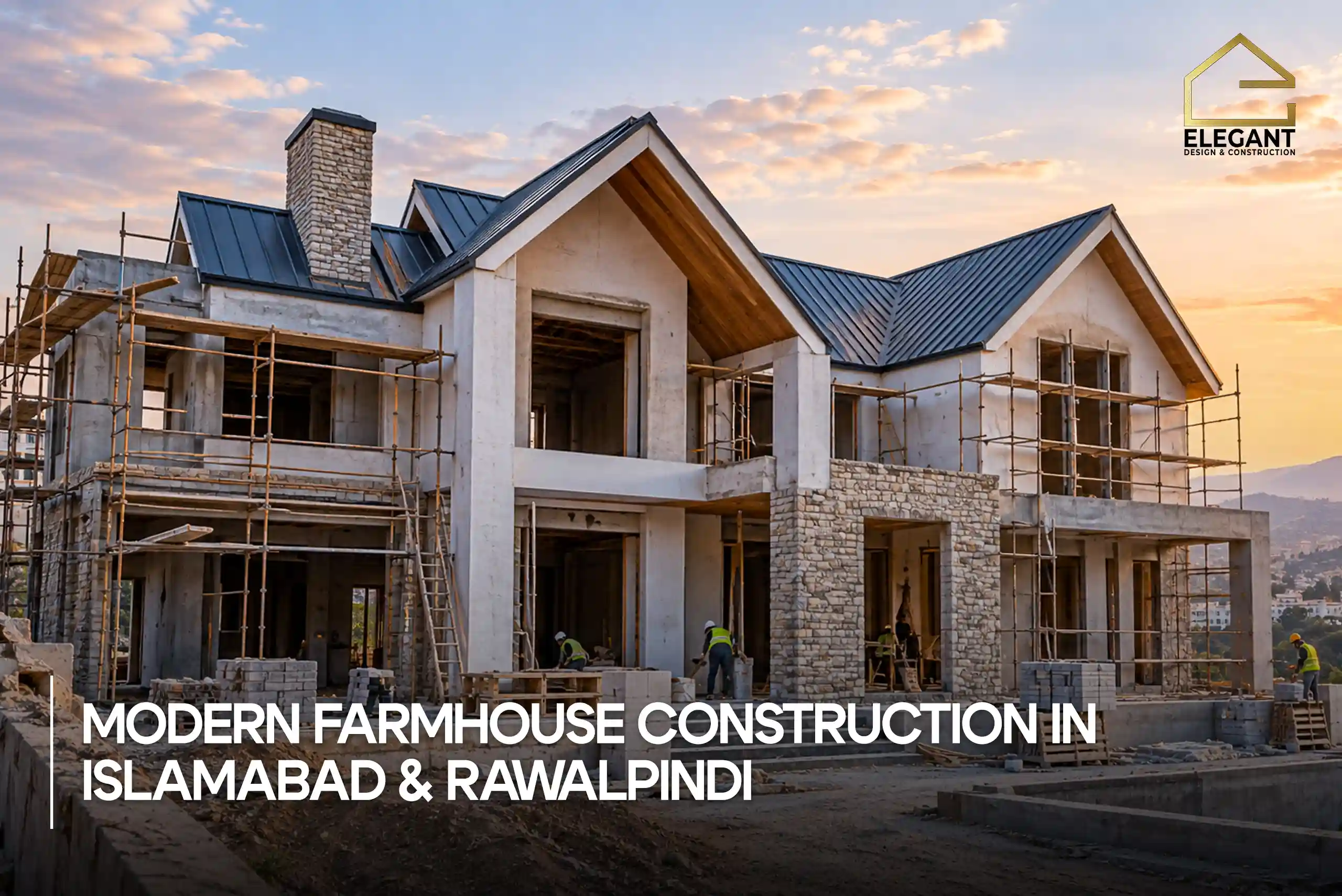
Grey structure is the complete load-bearing shell of a house before any finishing work starts. In Urdu it is called khaka or dhancha.
It covers the foundation, RCC frame, brick walls, roof slabs, plaster, and embedded service sleeves. It does not cover paint, tiles, doors, windows, fixtures, wiring, or plumbing fittings.
Why it is called “grey”
The name comes from the colour of the exposed shell. Concrete, raw brickwork, and cement plaster all read as grey.
Once paint, tiles, and joinery begin, the grey disappears. The house has then moved from “grey” to “finished”.
What is included in grey structure
A standard grey structure scope in Pakistan covers four groups of work. Each group has items that appear in almost every builder contract.
Substructure (below ground)
- Site clearing, marking, and excavation to the design depth
- PCC blinding layer below the footings
- Foundation footings and pedestal columns
- Damp-proof course at plinth level
- Underground sewerage and drainage pipe runs
Superstructure (above ground)
- RCC columns and beams
- Brick masonry walls, both external and internal
- Lintels over every door and window opening
- Roof slab for each floor and the staircase landing
- Two-coat cement plaster on all walls, inside and outside
Embedded services (empty sleeves only)
- Electrical conduit pipes cast into walls and slabs
- Plumbing sleeves through walls and slabs for later pipe runs
- Duct penetrations for HVAC where the drawings call for them
Site works
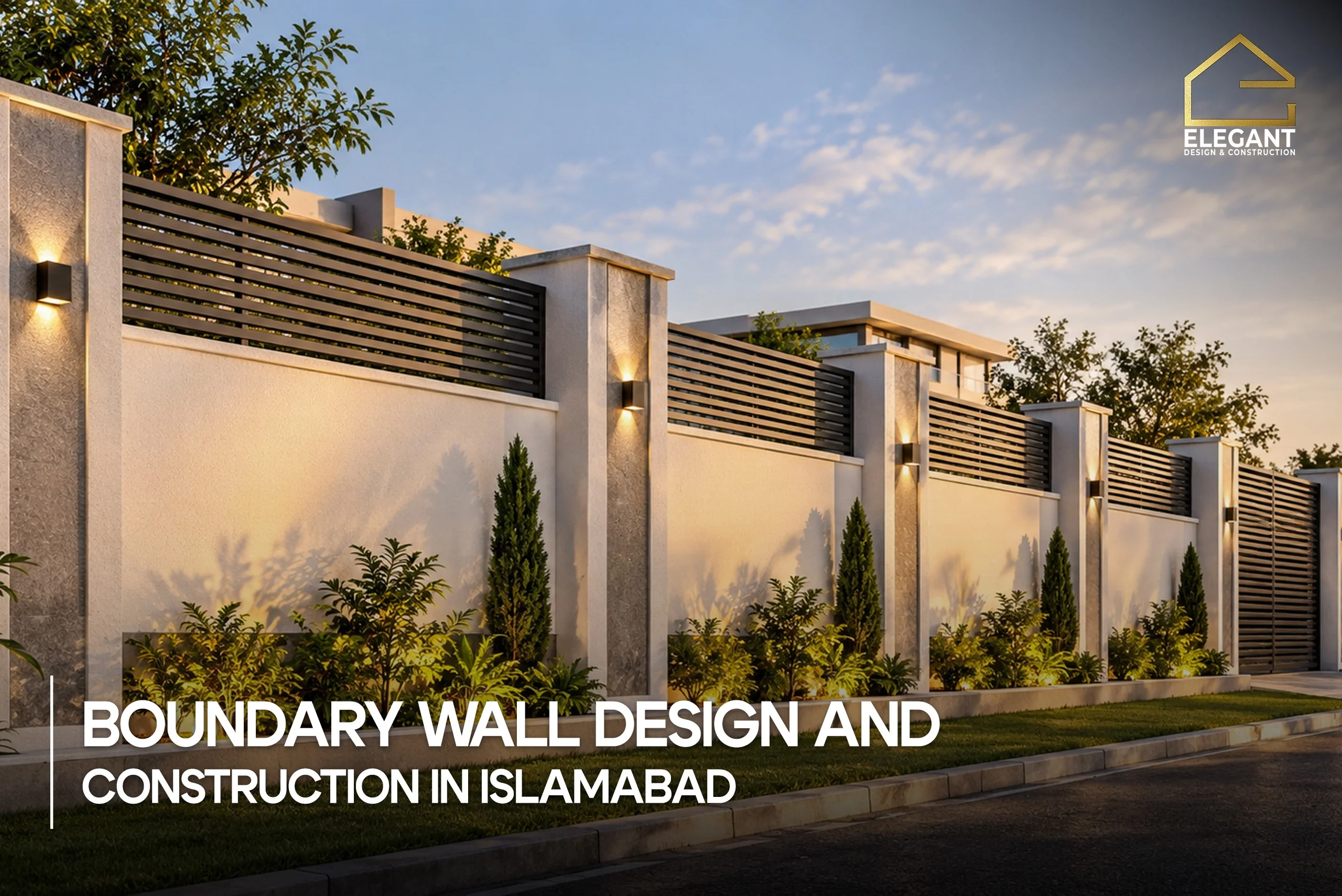
- Boundary wall with gate columns
- RCC water storage tank, either underground or overhead
- External PCC flooring for ramps, walkways, and the driveway base
What is NOT included in grey structure
This is where most first-time homeowners misread their builder contract. The items below are finishing scope.
They appear in a separate finishing quotation, not in the grey structure quote.
- Floor tiles, marble, and wooden flooring
- Interior paint, exterior paint, and weathercoat
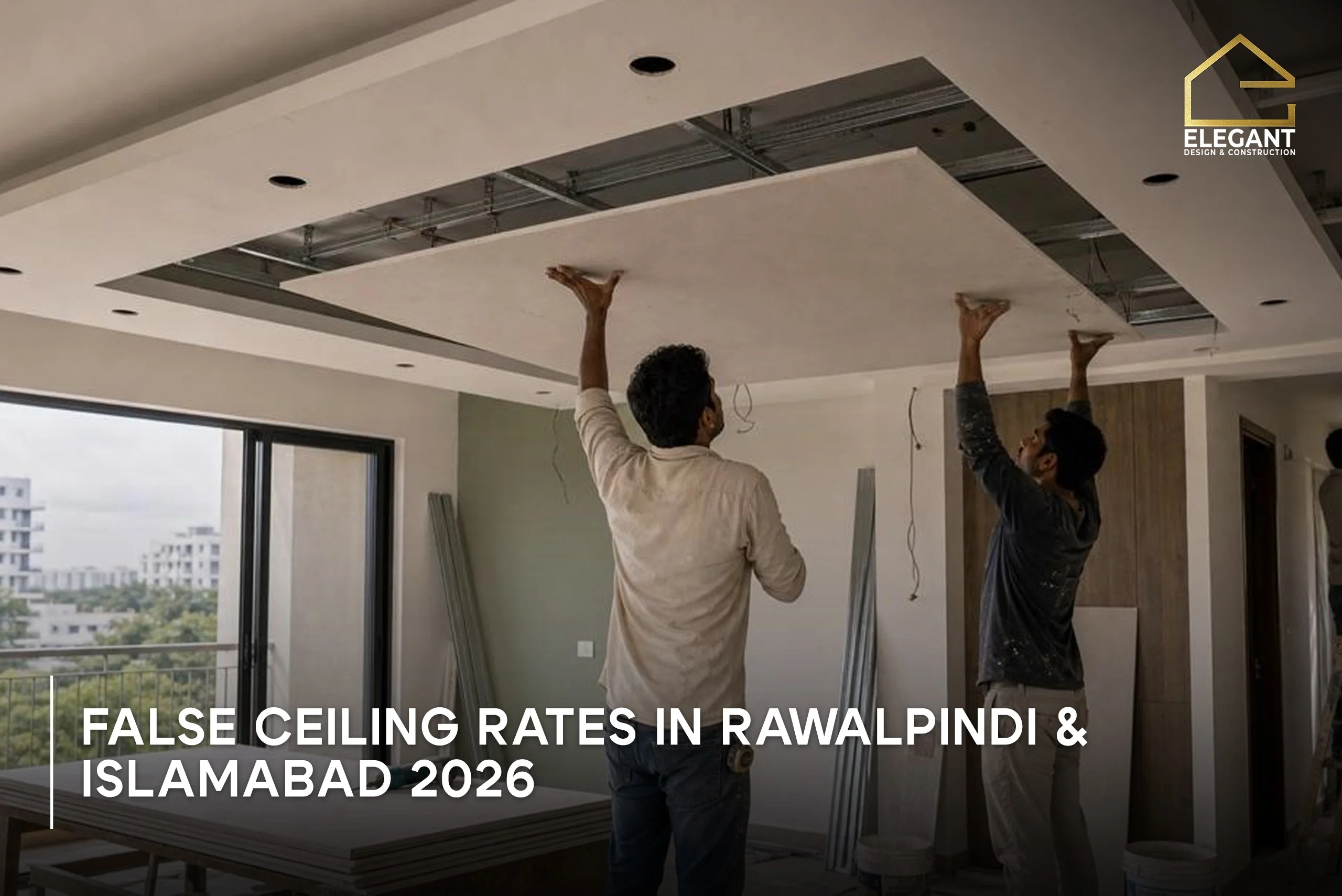
- False ceilings and cornices
- Doors, windows, grills, and any woodwork
- Kitchen cabinets, countertops, and appliances
- Bathroom fixtures such as commodes, basins, taps, and showers
- Electrical wiring, switches, sockets, DBs, and light fittings
- Plumbing pipes inside the sleeves, taps, valves, and geysers
- Wardrobes, staircase railings, and joinery
- Landscaping, driveway paving, and exterior lighting
Elegant’s scope rule: We lay the empty conduits and pipe sleeves during grey structure. Wiring, cabling, taps, and fittings sit inside the finishing scope. Some contractors bundle a “starter electrical” into grey structure. Ask them for the exclusion list in writing before you sign.
Grey structure vs finishing vs bare shell
These three terms often get mixed up on site. Here is how they differ in Pakistani construction practice.
| Aspect | Grey structure | Finishing | Bare shell |
| What it covers | Load-bearing shell, plaster, and embedded sleeves | Everything after grey structure: floors, paint, joinery, fixtures | Grey structure without internal walls or internal plaster |
| Typical use | Residential houses across Pakistan | Follow-on scope after grey structure sign-off | Commercial spaces that a tenant will fit out |
| Move-in ready | No, habitable but unfurnished | Yes, ready to live in | No, often no floors or ceilings |
| Share of total cost | 55 to 65 percent | 35 to 45 percent | 40 to 50 percent of a full-finish build |
Grey structure as a contract type
In Pakistani practice, grey structure is not only a build stage. It is also a common contract scope.
Many homeowners hire one contractor for grey structure and another for finishing. When you sign a grey structure contract, you agree on three things at once.
Scope
The contract must list every item that is included and every item that is excluded. Ask for the exclusion list inside the same document, not in a separate email.
Material responsibility
A with-material contract means the builder supplies cement, steel, bricks, and sand at a per-square-foot rate. A labour-rate contract means you buy the materials yourself and pay only for workmanship.
With-material is faster to run. Labour-rate gives you tighter control over quality but takes more of your time.
Handover point
Every contract needs a clear checklist that confirms grey structure is complete. The finishing contractor can then start against the same checklist. The full checklist is in the next section.
How much of your total build cost is grey structure?
For a typical residential build in Islamabad or Rawalpindi, grey structure runs at 55 to 65 percent of total construction cost. The remaining 35 to 45 percent goes to finishing.
A rough split of the grey structure share by trade:
| Trade | Share of grey structure | What drives the cost |
| RCC (concrete, steel, shuttering) | 35 to 40 percent | Cement grade, steel weight per sq ft, ready-mix or site-mix |
| Brickwork and plaster | 15 to 20 percent | Brick class, plaster thickness, total wall count |
| Foundation and excavation | 10 to 12 percent | Soil type, foundation depth, water-table level |
| Embedded conduits and sleeves | 4 to 6 percent | Number of points and consultant scope |
| Boundary wall, water tank, external works | 8 to 10 percent | Plot size, boundary length, tank capacity |
| Supervision, site setup, contingency | 15 to 20 percent | Site distance, project duration, monsoon exposure |
For plot-size numbers such as 5 marla, 7 marla, 10 marla, and 1 kanal, see our guide on grey structure cost in Pakistan.
When is your grey structure “complete”?
Your grey structure is not finished the day the roof is cast. It is finished only when every item below is true.
Use this as your handover checklist before you pay the final instalment.
- All RCC has been cured for the required period, usually 21 to 28 days after each pour.
- External and internal plaster is complete and cured with no visible cracks.
- The roof slab has passed a 48-hour water-ponding test with no leakage below.
- All electrical conduits are in place, capped, and traceable to their switchboard points.
- All plumbing sleeves are set at correct heights for basins, WCs, showers, and floor drains.
- Underground sewerage lines have been flow-tested and drain cleanly to the manhole.
- The boundary wall is complete, plastered, and either gated or ready for the gate.
- The RCC water tank is complete, waterproofed inside, and tested for leaks.
A signed handover note against this checklist protects both parties. It also gives the finishing contractor a clean scope to start against.
Common questions about grey structure
Is grey structure the same in Islamabad, Rawalpindi, and Lahore?
The definition is the same across cities. The specifications and approvals differ.
Islamabad and Rawalpindi builds must comply with CDA, DHA, or Bahria Town drawings. Each society issues a commencement NOC before excavation can start. Lahore-region builds follow LDA or private-society rules.
Can you live in a grey structure house?
Not really. There are no doors, windows, floors, sanitary fittings, or wiring inside.
Some overseas homeowners leave a house at grey structure for six to twelve months while they plan finishing. That is safe once the roof waterproofing is done.
How long does grey structure take?
A 5 marla house in Islamabad or Rawalpindi reaches grey structure in about 4 to 6 months. A 10 marla or 1 kanal double-storey house takes 7 to 10 months.
Monsoon between July and September can add 3 to 6 weeks. Site management during monsoon is the main variable.
What is grey structure called in Urdu?
Khaka (خاکہ) or dhancha (ڈھانچہ). Both words mean framework or skeleton. You will hear both terms on site and in builder quotations.
Is grey structure the same as bare shell?
No. Bare shell is a commercial-space term. It is a grey structure with no internal walls and often no internal plaster.
The tenant plans the layout themselves. A residential grey structure already has all internal partition walls built and plastered.
Should I hire the same contractor for grey structure and finishing?
Both models work. A turnkey contract with one contractor is easier to coordinate.
A split contract with a separate finishing contractor gives you tighter cost control. Finishing is where most cost overruns happen, so this matters.
Next steps
If you are planning a build in Islamabad, Rawalpindi, or the nearby societies, a scoping call costs nothing. It saves months of contract renegotiation later.
Our engineering team walks first-time homeowners through the exact scope boundary before any quotation goes out. See our grey structure constructionw service for scope, pricing bands, and contract options.